the business of being on holiday
VIBRANT SA
From outback to ocean, South Australia is brimming with art, culture, adventure and excitement
Tourism is all about fun – but it also spreads prosperity. South Australia’s powerhouse tourism industry employs 38,900 people and the visitor economy is worth a record $7.6 billion, with plans for this to grow to $12.8 billion and 52,000 jobs by 2030.
Driving this is a diverse array of drawcards appealing to a broad spread of travellers, from natural landscapes ranging from beaches to Outback, events such as those packed into Mad March, a vibrant food and wine culture now boosted by the small bar scene in city laneways such as Peel, Leigh and Gilbert streets and so much more.
Adventure experiences such as shark cage diving beckon and now include the 61km Kangaroo Island Wilderness Trail. This five-day walk gives visitors access to rugged, spectacular coastlines winding through Flinders Chase National Park, Kelly Hill Conservation Park and the Cape Bouguer Wilderness Protection Area.
Along with wildlife encounters the trail takes walkers past the natural attractions of Remarkable Rocks, Admirals Arch, Weirs Cove, Hanson Bay and Kelly Hill Caves. It can be done as a self-guided walk staying in campgrounds or with a commercial operator, and numbers are limited to avoid overcrowding.
Tourism Industry Council of South Australia chief executive Shaun deBruyn notes there is plenty of potential for growth, including opportunities driven by rare natural events and developments such as the Aboriginal Arts and Cultural Gallery at Lot Fourteen.
“The Lake Eyre flooding has been a fantastic driver for tourism in Outback South Australia, delivering increased demand for accommodation and tour bookings,” he says. “We are well within reach of achieving the 2020 targets of $8 billion and 41,000 jobs – for tourism to really flourish, it is critical the government co-invests with industry on key growth priorities, these being investment in marketing, business programs, infrastructure and regions.”
Tourism growth has seen companies relocate to SA – Cruise & Maritime Voyages Australia managing director Dean Brazier says the company moved its head office from Sydney to Adelaide in 2017. “With our Australian ships homeporting in Adelaide and Fremantle during the summer seasons, it made sense to base our Australian office closer to our main on-board operations,” he says. “Adelaide has the advantage of being central to both the west-coast and east-coast markets, which allows us to maintain strong connections to our travel agent partners across the country.
“Our new ship Vasco da Gama begins its inaugural Australian season in December and we’ve seen a fantastic response from South Australians who are keen cruisers, enabling us to increase our guest capacity and grow our local team.
“Adelaide has all the benefits and attractions of a large, cosmopolitan city but our operational costs are far more economical when compared with other locations, such as Sydney.”
cheers to the world's best
BAROSSA BOUND
Internationally esteemed for its food, wine and landscape, the historic Barossa Valley is a must-see region
If you were to ask most visitors to South Australia where they are heading first, chances are they will say the Barossa Valley ... for all sorts of reasons. The No.1 drawcard, of course, is wine – big, bold reds they’ll say, licking their lips and dreaming of a shiraz. It’s a good call since seven generations of grape growers and wine makers have turned this fertile land – just an hour’s drive from Adelaide -– into one of the great wine-growing regions in the world.
With 150 wineries and 80 cellar doors, there’s a lot of wine to choose from. Well-known labels like Jacob’s Creek, (where the first vines were planted in 1847), Penfolds (Grange), Wolf Blass (Black Label) and Henschke (Hill of Grace) call the Barossa home.
But some of the “newer” kids on the block are giving them a run for their money. The best wine in the world (yes, the world!) comes from Kellermeister. Their Wild Witch Shiraz 2015 vintage won Wine of the Year at the recent London Wine Competition.
Wine, we know, put the Barossa on the tourist map. But there is so much more that has helped keep it firmly on the tourist radar including a fascinating heritage, a landscape of rolling hills and patchwork vines and a booming food industry.
History buffs love the stories of the early pioneers – the farmers, carpenters and stone masons – who settled here in the 1840s after escaping religious persecution in Prussia. That rich German heritage is still evident in the villages dotted all over the valley, their historic stone homes and quaint churches.
When you can stop their mouths watering, foodies rave about the Barossa’s fresh produce. You’ll find a smorgasbord of local delicacies from meats to pastries and oils at the weekly Barossa Farmers’ Market.
Then there are the chefs who pull it all together in fabulous feasts at award-winning restaurants like Appellation, FermentAsia, Fino and Harvest Kitchen. Celebrity chef Maggie Beer keeps the focus firmly on the Barossa through TV programs and oodles of books, and her Pheasant Farm tasting room and Eatery restaurant are “must-sees”, along with the Barossa Valley Cheese Company and Chocolate Company.
While you’re here, make sure to: see the oldest shiraz vines in the world at Langmeil Winery then check out Tscharke’s and Dell’Uva who are shaking things up by trying lots of new grape varieties; make your own blend at Jacob’s Creek; taste your birth year tawny at Seppeltsfield; pair wine and chocolate at Schild Estate and enjoy a platter at Z Wines.
Whether you go by car or bike, in a limo or bus, or you see it from the air in a helicopter or hot air balloon, the Barossa is an experience for all the senses.
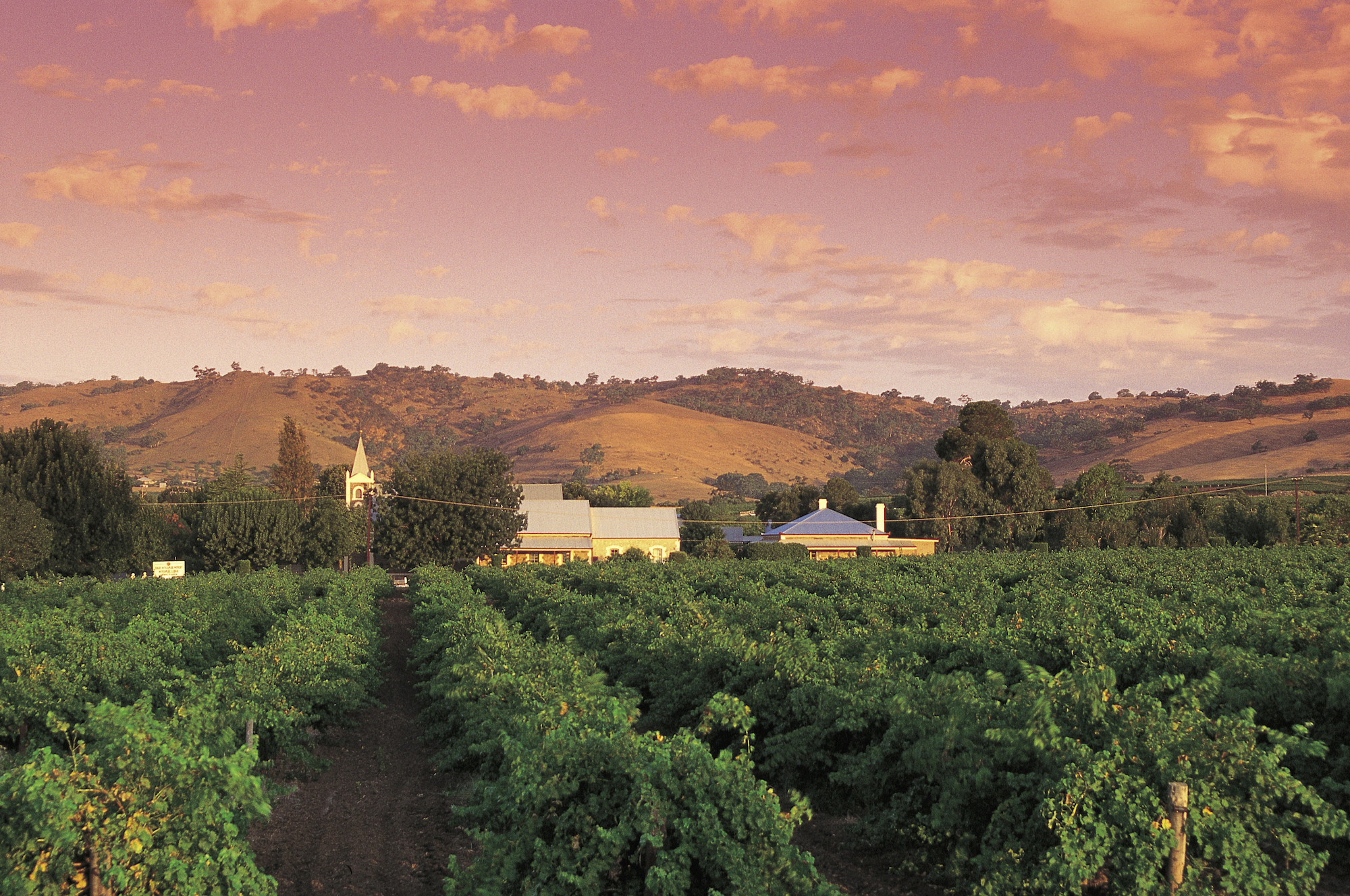
Sunset over Bethany Vineyards in Barossa Valley & Wine Barrels. Pictures: SA Tourism Commission
jump in with both feet
SWIM WITH THE FISH OR FLY WITH THE BIRDS
A world of wonder awaits the adventurous tourist just over an hour from the city
There are very few places on the world like SA’s Fleurieu Peninsula. On the one hand it’s a delicate ecosystem steeped in history and teeming with wildlife. On the other, it’s a holiday hotspot renowned for its great food, wine and beaches. But above all, it’s a place to be enjoyed.
The undisputed jewel in its crown has to be the unspoilt paradise of the Coorong National Park. Spirit Of The Coorong’s Bain Pedler and Rupert Kelly are the perfect pair to take us into Storm Boy country, where iconic settings from both film versions dot the landscape as sea lions play and pelicans soar mere inches above the water, egged on by the chorus of more than 200 species of birds.
Joining me is a couple from Swan Hill, who are taking the cruise for the third time in 20 years. “It’s different every time we do it,” the old timer replies, not taking his eyes off a pair of oystercatchers, “but it’s always beautiful.”
It’s a remarkable part of the world – and one we don’t just appreciate from the water, alighting the boat for a walk through the dunes, discovering the bush tucker of the Ngarrindjeri people and dipping our toes in the mighty Southern Ocean. We’re the only ones on the beach for as far as the eye can see. It’s a humbling experience and the highlight of what is probably the most tranquil three-and-a-half hours you’ll ever spend.
As relaxing as the cruise is, it’s time for something a little more adventurous, and for that I head to Oceanic Victor. This open-air aquarium off Granite Island is home to 40 bluefin tuna, some salmon, snapper, a monster mulloway and a couple of Port Jackson sharks. And I’m here to swim with them.
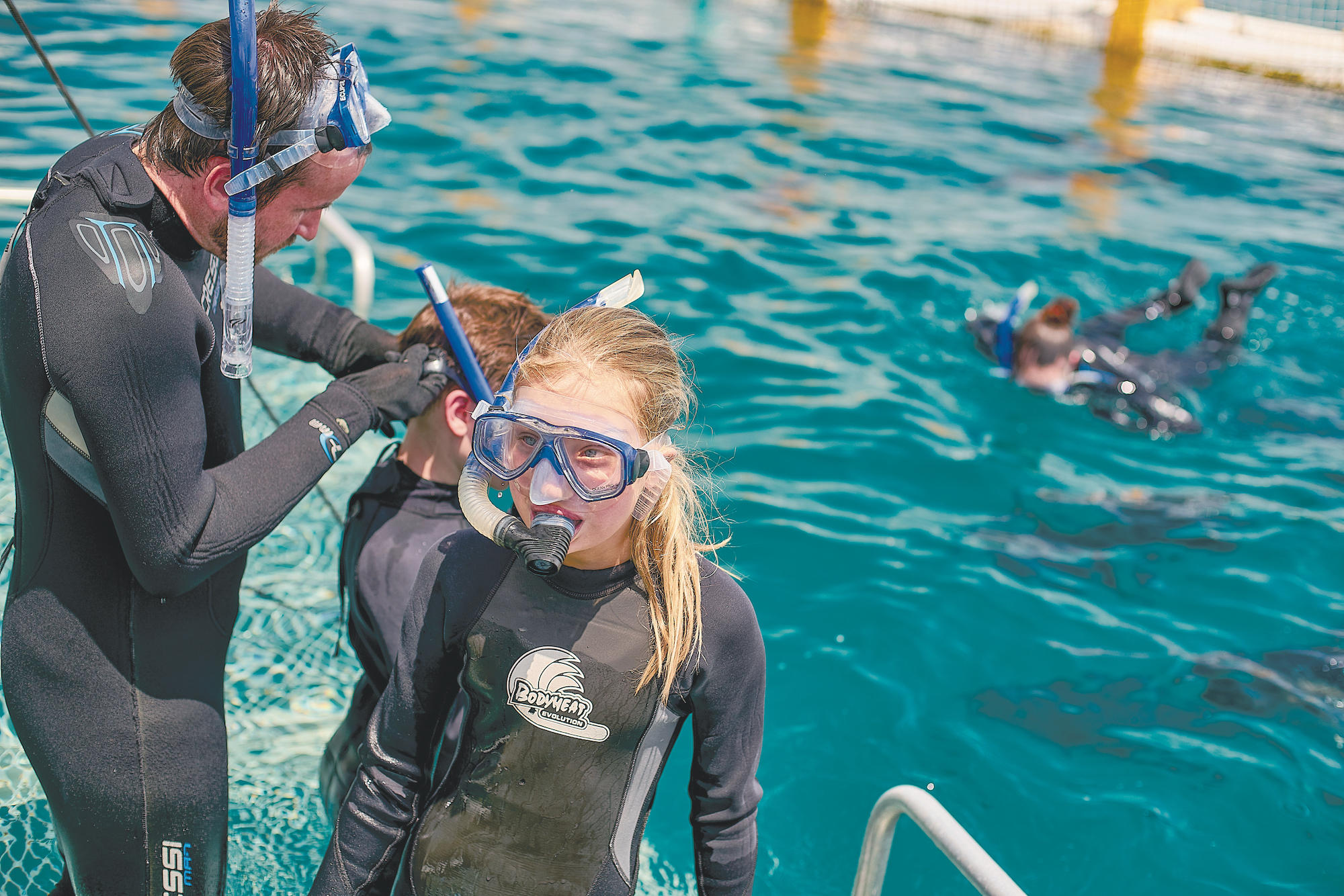
It’s a cold day – about 16C – but in an 11mm-thick wetsuit I’m warm and surprisingly buoyant, able to simply float on my belly as these Ferraris of the ocean rocket past mere inches from my face mask at speeds of up to 75km/h. The fish start off shy, but as soon as my hosts Chris Presser and Will Davis begin throwing pilchards near me that clear water becomes a ball of white hot action as the sunlight glints off the silver bodies of these impressive pelagics.
“That sound of someone laughing, screaming or squealing through their snorkel as a tuna swims past them ¬- you never get sick of that,” Chris says, ushering me towards the underwater viewing platform and the aquarium’s touch pool. I can’t imagine it’s anywhere near as addictive as being in the water with them is.
All that swimming makes you hungry, and The Salopian Inn in picturesque McLaren Vale is the pinnacle of the region’s fine dining options. The food is magnificent, with colours, flavours and textures marrying perfectly to create dishes that, almost impossibly, taste even better than they look. A 10-hour cooked kangaroo tail, polenta on buffalo curd, and a blood orange parfait make up a few of my courses, but the highlight is undoubtedly their prawn dumplings. It’s a dish so good it’s never been removed from the seasonal menu.
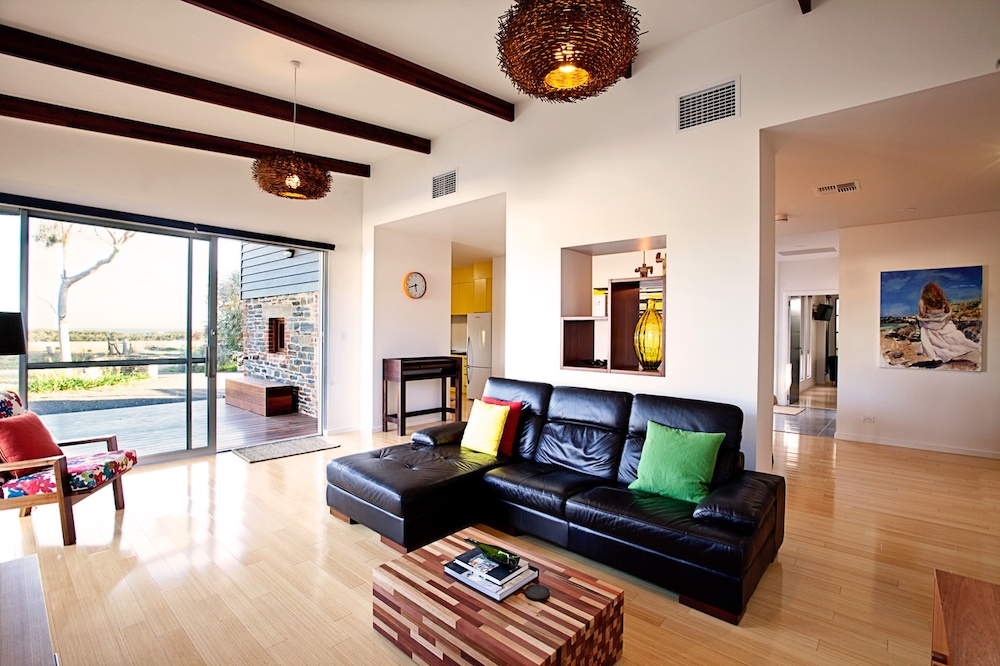
After spending a good 45 minutes in a food-induced coma, it’s time to head for my accommodation and for my money, it doesn’t get much more special than the luxurious Jimmy Smith’s Dairy in Port Elliot. Transformed by local furniture maker Noel Akmens and his wife Robyn, the home beautifully celebrates its preserved history as a former dairy but has more than enough creature comforts to make you feel absolutely spoiled. It’s decadent, memorable and will have you planning your next visit to the region – almost as much as the citrus tart and raw raspberry fudge I get for morning tea from the legendary Port Elliot bakery.
Having explored the Fleurieu from land, sea and river, and knowing my time in this region is nearing its end, there’s only one option left for me – the sky. My pilot Greg takes me and my flight companion Shaun Henderson up to 15,000 feet, where we can see the Fleurieu in all its glory – the white clouds, the blue sky, the various greens of the rich pastoral lands and the turquoise ocean where, I’m told, you can spot whales in the winter months.
“How many times have you been up?” I ask Hendo.
“More than 1300 times now,” he replies as my jaw drops.
“Do you ever get sick of that view?” I ask.
“How could you?” he retorts.
The stupidity of my question sinks in as the Murray reveals itself out my window, winding its way like a giant serpent to the Murray Mouth and on through the Coorong. Out the other window I can see Granite Island, the pounding surf beach of Waitpinga and right around to Aldinga.
Hendo taps me on the arm. “15,000 feet,” he says.
That’s my cue. I shimmy forward and roll up the door, exposing us to the incredible roar of the wind outside.
“On three!” Hendo says. “One, two, three!”
We somersault out of the plane.
It’s at this point I should probably point out this not your ordinary joyflight. Our plane has a big SA Skydiving logo on the side, my new mate Hendo is strapped securely to my back and strapped to his is a parachute...
In true Spinal Tap style, that wind noise is turned up to 11 as we freefall towards the earth at 220km/h for a full 70 seconds. It’s an exhilarating feeling and I’m treated to uninterrupted 360-degree views of this incredible natural wonderland. Suddenly the roar of the wind is shattered by a deathly silence as the parachute deploys at around 5000 feet, leaving us to gently descend to our drop zone over the next five minutes. To say it’s an unforgettable experience is the mother of all understatements. It’s the perfect end to the perfect trip.
While this may sound like a jam-packed few days, the truth is this is I’ve merely scratched the surface of this unique location. But the good news is, being just over an hour from the city, discovering all the wonders of this amazing place is a piece of cake. And I, for one, can’t wait to return.
