ONE STEP BEYOND
A BOLD
NEW FRONTIER
SA has seized the moment of change in how space works to
build an industry with massive potential.
South Australia has stepped into the vacuum of an industry hollowed out for the past 50 years. Sensing shifts in how the global space industry works, SA has seized an opportunity that was there for the taking. Instead of being the playground only for governments able to spend billions of dollars on a single project, space has been opened up to the private sector with smaller, affordable launches and become a sector that reaches into everybody’s daily life.
Headlined in SA by winning the Australian Space Agency headquarters, the sector is spawning start-ups and attracting interest from prime international firms. SA’s move has revived its heritage of being home to the 1967 launch at Woomera that made Australia only the third country in the world to launch a satellite from its own territory. It is being built on SA’s rich tapestry of research, know-how and entrepreneurship.
The catalyst came when Adelaide won the rights to host the International Astronautical Congress, the world’s largest gathering of space professionals. With nearly 5000 delegates on the way and a global spotlight ready to shine on Adelaide, a space office was set up in 2016 by the State Government, later becoming the SA Space Industry Centre.
“There was no space agency forging international links,” says the centre’s chief executive, Richard Price. “The SA Space Industry Centre started building international relationships. Then, the more we looked at it the more we realised there was already a strong ecosystem here. “It’s actually unique – we had the pedigree of the people from SA who advocated to get the International Astronautical Congress here, we have strong capability in our universities, and we had a lot of start-up companies.”
The start-ups included companies working on propulsion, communication, mini-satellites and launch. “We had elements of every single bit of the space supply chain,” he says.
Price is also chief executive of Defence SA, which drives the State Government’s support for the sector. The director of Defence SA’s space division is electronics engineer Nicola Sasanelli. “For 50 years, space was not a priority for this nation. Then we started to think about space,” Sasanelli says.
Globally, the space sector is now worth about $US380 billion with Australia generating less than 1 per cent of that. But Australia represents about 2 per cent of the broad global economy – meaning there is plenty of potential for the space industry to grow.

“We found we have the knowledge, we have the people, we really believe we can do a lot more activity,” Sasanelli says, citing Morgan Stanley forecasts that the global industry will be worth more than $US1 trillion by 2040 with rampant growth expected in satellite broadband and earth observation services.
Currently in SA, more than 800 people are employed in the space sector with about 70 companies or organisations involved. Between 2000 and 2017, the number of private sector space companies in SA more than tripled from nine to 34, including six new companies established over the past 18 months. Over the past two years, more than $60 million investment has been committed to the space industry – including $30 million from venture capital, $15 million from industry and some $7 million from the SA Government.
“The space sector is changing tremendously quickly, driven by the cost equation,” Price says. “The notion that Australia can’t be a significant player in space becomes ridiculous when you say, ‘Well, actually we’re not talking about hundreds of millions of dollars’ investment in a single satellite, we’re only talking about hundreds of thousands or a few million’.”
To expedite growth, the State Government is funding a Defence and Space Landing Pad to help foreign companies test the waters before making a final commitment to open an office in SA. The landing pad offers free rent for three months plus free advice on migration issues, real estate, regulatory and legal requirements of setting up a business. Companies will be given guidance on financing and be introduced to local enterprises which could be customers or suppliers.
“The whole idea is to make it as easy as possible to do business in SA,” Price says. “It gives them breathing space to do the business case and decide whether they can set up here. And it’s not just about bringing new companies to SA – it’s also about giving SA companies more opportunities in the supply chains.”
So far, the first two companies are in the landing pad but flying under the radar while they explore the landscape. Office space at the Defence and Space Landing Pad will be located at Lot Fourteen, the neighbourhood on Adelaide’s North Tce which will be the base for the Australian Space Agency, Mission Control, Space Discovery Centre and related initiatives.
“Lot Fourteen is a great idea, it is a multidisciplinary hub so we don’t only have the space industry,” Sasanelli says. “We have defence, cyber security, big data, machine learning – all part of the new knowledge economy. It is a dream to work in Lot Fourteen – there is the heritage and then the new building, this tower (the Innovation Centre) that represents the future, a fantastic link between the past and the future. It is a pathway of knowledge. Our daughters and sons could be very proud of the work we are doing now.”
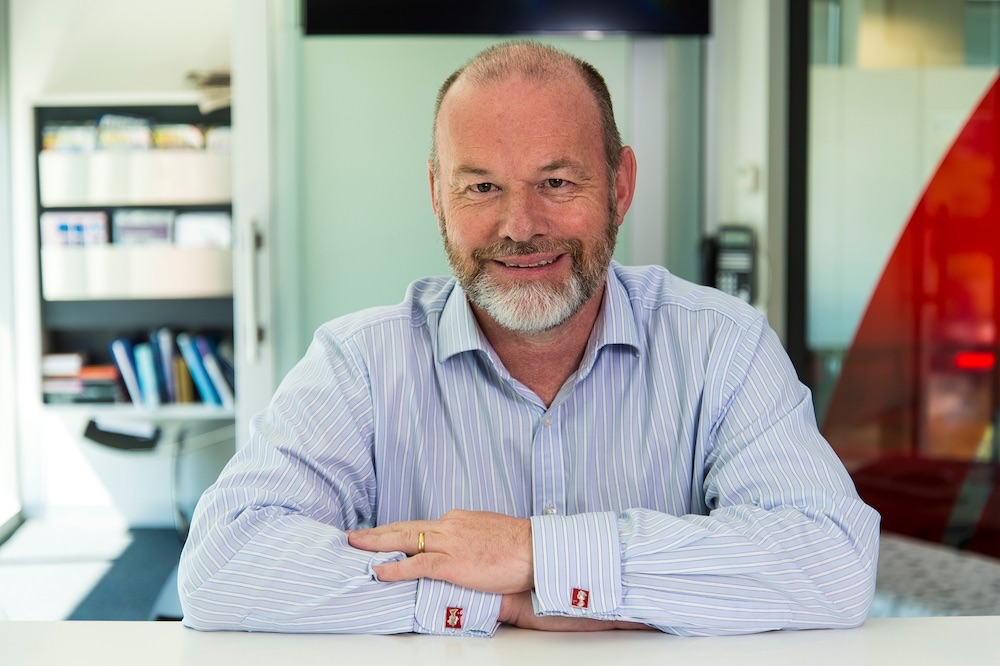
Richard Price, chief executive of Defence SA and chief executive of the South Australian Space Industry
As well as the Defence and Space Landing Pad, the State Government has established a $4 million Space Innovation Fund to invest in start-up companies. A Space Scholarship Program provides up to $100,000 annually for entrepreneurs in space enterprises to travel overseas for study. A Space Incubator Program provides business mentoring, technical advice, market research and other services. A Space Accelerator Program is a structured service to help companies refine their technology, build channels to market and pitch for investors and partners.
“We have a critical mass here in SA – companies, research organisations and associations,” Sasanelli says. “It is a really vibrant ecosystem.
And the government has played a crucial role; we really have best practice in terms of government. We started the space office under Labor premier Jay Weatherill with strong support from Steven Marshall. Then, since Steven became Premier we have had strong support from Labor leader Peter Malinauskas. We’ve enjoyed really good bipartisan support.
“One way to grow the space economy is to talk to the end users – farmers, fishers, drivers, builders, miners. We can show them how space technology can help them to be more competitive, how it can help improve their business.
“We estimate there are 1.4 million companies in Australia that can benefit from space technology. So we have a huge business.”
It is important for the scientific community involved in the space industry learn to communicate with these end-user companies in language that they can understand, says. Price sees a natural affinity with defence but important differences.
“Defence and space share a lot of technology but they are very different markets,” he says. “There are a lot of companies which span both military and civilian aspects of space but there are a lot of civilian companies that have nothing to do with the military side. It’s important to understand that.”
He also wants space to learn lessons from the Defence Department’s procurement policies. Defence has enabled Australian-based companies such as manufacturers to become part of global supply chains for equipment bought from prime overseas-based firms. Currently, most space purchasing involves Australians at an operational level but not in the design or manufacture.
Price is convinced the space industry can follow a similar path. “There are a whole lot of elements that have application in space that we can build up by getting them into real products and projects,” he says.
Looking ahead, he wants to see a big national project. “We need to keep the population engaged,” he says. “Just think how amazing it would be if we launched an Australian satellite from an Australian rocket. We’ve got plenty of people building satellites in Australia. The Smartsat CRC will be building at least three satellites. The CSIRO has commissioned a satellite which is being built here in Adelaide. We’re aiming to have launch capability in SA. The Northern Territory and Queensland are working on equatorial launch facilities. So, we’re well on the way.
“And we want more start-ups moving to scale-up like Myriota has done. They were the first space company outside the US to attract investment from Boeing. They’re well and truly in that scale-up phase. Success will be more companies like that.”
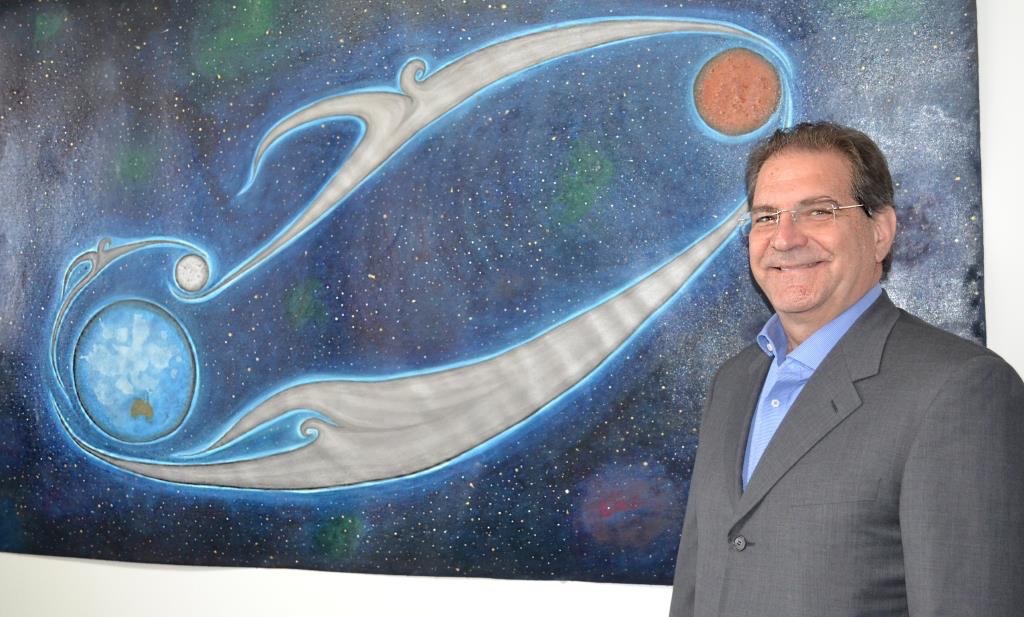
Nicola Sasanelli, director of the South Australian Space Industry Centre, with his painting
Gatekeeper of Mars. The painting was presented to NASA as a gift from the South Australian
space industry
Perception Shift
HOW SA CHANGED
MY MIND
IN JUST ONE WEEKEND
Less than three hours after leaving
Melbourne’s noisy, congested CBD, Carolyn Bendall,
chief marketing officer for ANZ Australia,
was luxuriating in the wonders of one of Australia’s most-celebrated wine regions
I have to be honest: I haven’t been to South Australia for anything other than a couple of fleeting work trips to Adelaide for about 20 years, and my memories are it had little more than a few wineries to offer visitors to the state. So leaving Melbourne on a dreary Friday afternoon to spend a weekend in SA courtesy of the South Australian Tourism Commission, I was interested to see if my perspective would change. Short answer: it did.
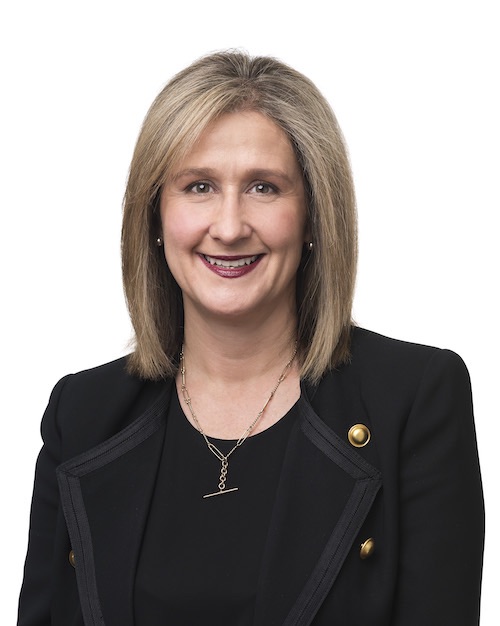
From the moment we touched down at Adelaide Airport to the moment we took off again almost 48 hours later, I got an insight into a much more contemporary, accessible state than I remembered or even expected.
Leaving Melbourne CBD around 4.30pm on the Friday afternoon, I had to fight my way through the rush-hour traffic before racing to the airport terminal just in time to catch my 5.55pm flight. Touching down on a bright, beautiful winter’s evening in Adelaide less than 90 minutes later, I was taken by the contrasting ease of travelling and the lack of congestion to be found in the state. Less than an hour after landing, we were arriving in the beautiful McLaren Vale region; had that been Melbourne, we’d have been lucky to have cleared the CBD in this time.
After dropping our luggage at the Hotel California Road @ Inkwell Wines, the region’s newest luxury micro-hotel, we dined at the Star of Greece restaurant in Port Willunga, with incredible views overlooking the ocean. The food was locally sourced, fresh and perfectly presented, and the perfect wine matched to every dish. The verdict: delicious.
I love fresh produce and spend many hours wandering around Melbourne’s markets, so the next morning I was really excited to visit the farmer’s market at Willunga, less than a 10-minute drive from our accommodation. The colours of the oranges and pumpkins, the mushrooms and the village greens – it was just beautiful. The producers are so proud of what they make. I loved how each stall was really quite specialised, the bakery with homemade pies and tarts which were selling literally like hot cakes – it was amazing!
After the market, we had a lunch of a classic club sandwich and chicken salad at the Terre Cafe at Willunga, then it was back to Inkwell Wines for some wine tasting with owners Dudley and Irina, who are very focused on sustainable living and the organic growing of grapes and wine production.
The afternoon was spent touring the local area with Simon from Coast & Co, a new business that specialises in creating tailor-made holiday packages. Simon gave us a brilliant four hours around the whole McLaren Vale region, from Onkaparinga Gorge through the vineyards to the coast. I’m ashamed to admit I didn’t realise how close to the coastline McLaren Vale is and just how beautiful that coastline is.
We visited a number of boutique wineries, including Samson Tall, a gorgeous little church and churchyard that owner and winemaker Paul has converted into a cellar door, and Bekkers Wine, where we met husband and wife Toby and Emmanuelle who are producing high-end, premium wines. We were very lucky to sit down and have a tasting with them and listen to their South Australia-meets-France story.
Simon finished off the afternoon by taking us to the Victory Hotel in Sellicks Hill, which has incredible views over the coastline and offers top-class food. And the owner has one of the most incredible cellars in the region, hidden below the hotel, that holds beautiful, rare wines and a sensational long table for lucky guests to enjoy the food and wine.
On Saturday evening we had a lovely degustation dinner at Mitolo Wines in McLaren Vale with a beautiful fire blazing next to us. We spent that night in luxuriously appointed self-contained apartments at The Jetty in Port Willunga and woke on Sunday morning to another beautiful, crisp winter’s morning. We rugged up, walked along the coastline for an hour and then came back to the apartment for a light breakfast.
Then we were picked up and headed out to the d’Arenberg Cube, which I had heard about before and had been looking forward to. What really struck me as we went through it was the design and the attention to detail: it’s an incredible piece of architecture, let alone its wonderful cellar door, restaurant, gallery and museum, and reflects how pioneering, innovative and contemporary South Australia is becoming.
That modern feel also came through in the wineries we visited. Most are family owned, and many of the winemakers are young and/or next generation. There’s a big focus on sustainable and organic production. To go to a producing region where they are so clearly thinking about their collective footprint and sustainable farming is a real point of attraction.
After a delicious degustation lunch with paired wine from the d’Arenberg cellars, we were picked up outside the Cube by Helivista for a 30-minute helicopter flight over the amazing patchwork of the region, with its sprawling vineyards and the colours of the grapes and fields, from golden through to deep green. We got an appreciation of what a landmark the d’Arenberg Cube is, and then we flew back along the coastline to see the Victory Hotel, the Star of Greece shipwreck and the beautiful coastline. That was our final experience and it was amazing to cap off the weekend with a bird’s-eye view of the region in which we’d just spent almost 48 hours.
We left Adelaide on the 6.25pm flight on Sunday evening and we're back home in Melbourne by 8.15pm. We were amazed at how much we had fitted in in just 48 hours.
My impression of South Australia has moved from being a part of Australia a little behind the times to a contemporary state that is super proud of its tourism and all that it has to offer – and so it should be. We did a deep dive into one region and I’m conscious there are many others in and around Adelaide. Since we got back, I’ve been telling people they really have to get over to Adelaide and experience one or more of these regions – and they can do it in a weekend.
That’s the best thing: you have different types of accommodation, lovely combinations of food and wine, the beaches and coastline,
and all sorts of other experiences – and it’s so accessible to do.
CAROLINE'S ITINERARY
FRIDAY: Depart MEL 5.55pm, arrive ADL 6.45pm.
55 min drive to Hotel California Road @ Inkwell Wines, Tatachilla. 8pm Dinner at Star of Greece, Port Willunga.
Stay overnight at Hotel California Road @ Inkwell – bed and breakfast.
SATURDAY: 10am Breakfast and a wander at Willunga Farmers Market. 12pm Lunch at Terre Cafe, Willunga.
2pm Regional tour by Coast & Co. 7pm Dinner at Mitolo Wines. Stay overnight at The Jetty, Port Willunga.
SUNDAY: A little sleep in, a beach walk and a light breakfast in accommodation. 11am d’Arenberg Cube.
12pm Degustation lunch. 4pm Helicopter tour over McLaren Vale with Helivista. 5.30pm Arrive ADL.
Depart ADL 6.25pm, arrive MEL 8.15pm.
